
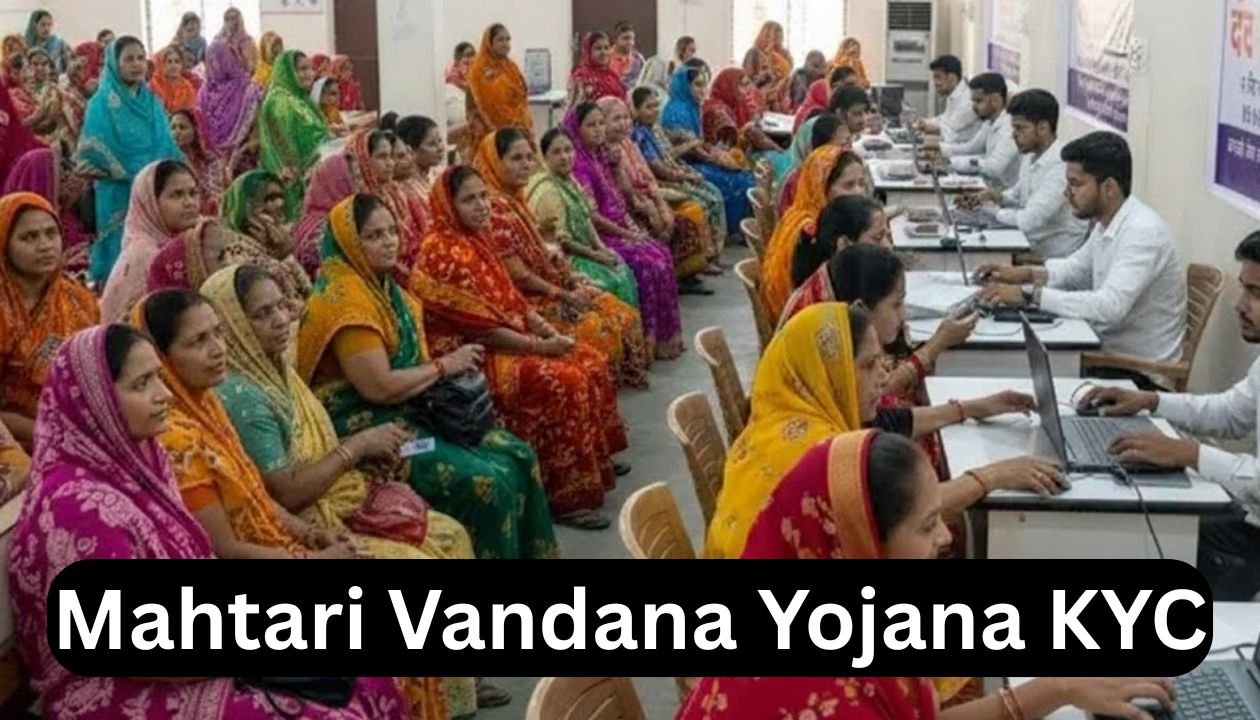
As we all know that the Government of Chhattisgarh state has previously launched a women empowerment initiative known as Mahtari Vandana Yojana, under which the Government aims to provide financial help and support to all the females coming from economically disadvantaged households across the state. And now the Government has started to receive the Mahtari Vandana Yojana KYC Applications for all the females who have registered themselves under this scheme, so that they’ll be able to receive the financial help of INR 1,000 monthly continuously. All those females who haven’t completed their kyc they will not get the financial amount credited in their bank accounts.
Contents
What is Mahtari Vandana Yojana
The Honourable Prime Minister of India, Mr Narendra Modi, has launched this impactful female empowerment initiative known as Mhtari Vandana Yojana on 10 March 2024, aiming to provide financial help and assistance to all the females coming from economically disadvantaged backgrounds across the Chhattisgarh state. Under this scheme, the Government aims to provide financial help of INR 1,000 to all the females sent directly into their bank accounts by the Direct Benefit Transfer (DBT) Process.
The authorities of Chhattisgarh have allocated a total budget of INR 5,500 Crores for the implementation of this scheme, and till now about over 70 Lakhs of females have already received the benefits provided under this scheme.
Objective of Mahtari Vandana Yojana KYC
The main objective behind this Mahtari Vandana Yojana KYC is to inform all the female beneficiaries who have registered themselves under this scheme that they have ot complete their KYC as soon as possible in order to continue receiving the financial benefits provided by the Government under this scheme. According to this scheme, the Government will provide financial help of INR 1,000 monthly for about 12 months, totalling INR 12,000 annually, to all the females across the state. With the help of this scheme, the females will become financially independent and self-reliant so that they’ll be able to fulfil their needs and requirements.
Mahtari Vandana KYC Online Process
- Visit your nearest authorised centres, such as Anganwad Centres or CSC.
- Now you have to provide the required documents to the Centre Officials.
- Now the Centre’s Officials will start verifying your documents and Aadhar verification.
- Then you have to complete the face Authentication.
- At Last, after completing the eKYC process, the officials will approve your KYC and provide you with an acknowledgement slip.
Short Highlights of Mahtari Vandana Yojana KYC
| Launched By | Prime Minister Narendra Modi |
| Launch Date | March 10, 2024 |
| Objective | Women’s economic empowerment and financial security |
| Monthly Benefit | ₹1,000 per month |
| Annual Benefit | ₹12,000 per year |
| Payment Method | Direct Benefit Transfer (DBT) to bank accounts |
| Target Beneficiaries | Eligible married women, widows, divorced, and deserted women in Chhattisgarh |
| Eligibility Age | Minimum 21 years old as of January 1, 2024 |
| Estimated Beneficiaries | Over 7 million (70 lakh) women |
Where to Complete KYC
- Anganwadi Centers (AWC)
- CSC (Common Service Centers) Centers
- Ward Offices/Panchayat Offices
Required Documents for KYC
- Aadhaar Card
- Mobile number linked to your Aadhaar
- Bank account details
- Passport-sized photograph
- Application number received during the initial application process
Eligibility Criteria
- Applicant must be a permanent resident of Chhattisgarh state.
- Only females from financially wekaer households are eligible.
- Applicant must be a married woman, a widow, a divorced woman, or a deserted woman.
- Age Criteria for applicants should be a minimum of 21 years of age.
Financial Rewards
| Monthly Assistance | ₹1,000 |
| Annual Assistance | ₹12,000 |
| Disbursement Frequency | Monthly installments |
| Payment Method | Direct Benefit Transfer (DBT) to the beneficiary’s Aadhaar-linked bank account |
Mahtari Vandana Yojana KYC Details
| Purpose | To verify beneficiary identity and bank details for DBT |
| Process Type | Primarily offline at authorized centers |
| Location | Anganwadi Centers, CSCs, Ward/Panchayat Offices |
| Authentication Method | Aadhaar-based OTP or biometric verification |
| Cost | Free of charge at government-designated centers |
| Key Document Required | Aadhaar Card (linked to mobile and single bank account) |
| Outcome | Enables successful Direct Benefit Transfer (DBT) of funds |
FAQ’s
Is e-KYC mandatory for the Mahtari Vandana Yojana?
Yes, e-KYC is mandatory. Failure to complete it may result in the suspension of monthly financial assistance.
Can I do the e-KYC online myself?
No, beneficiaries cannot do the e-KYC themselves online. The process must be completed in-person at an authorized center.
Where can I get my e-KYC done?
You must visit your nearest Anganwadi center, Gram Panchayat office, ward office, or a Common Service Center (CSC).
What documents are required for the e-KYC?
You need your Aadhaar card, bank passbook, the mobile number linked to your Aadhaar, and a passport-size photograph.
Is there a fee for the e-KYC process?
No, the e-KYC process at authorized government centers is free of charge.
Does my bank account need to be linked to my Aadhaar and have DBT enabled?
Yes, it is crucial that your bank account is linked to your Aadhaar card and has Direct Benefit Transfer (DBT) activated for receiving the funds.
What if my bank account is a joint account?
A personal bank account is required; a joint account is not typically accepted for this scheme.
Who is helping beneficiaries who haven’t completed their e-KYC?
The Women and Child Development Department has instructed Anganwadi workers to go door-to-door to assist eligible women in completing the e-KYC process.
How do I check if my Aadhaar is seeded with my bank account?
You can check the seeding status on the official UIDAI website using your Aadhaar number, provided your mobile number is linked to your Aadhaar.

Khushi Singh
Khushi Singh is a content writer with 3 years of experience in government schemes. She writes simple and helpful articles that guide people to understand and benefit from public welfare programs.